The Hidden Costs of "Just Getting By"
It's easy to dismiss a few extra emails here or a quick phone call there. But when you multiply those actions by hundreds of patients, dozens of staff, and multiple insurers across the GCC and beyond, those small inefficiencies balloon into significant operational challenges.
Consider these common scenarios:
Medical assistance companies and hospital administrative teams spend hours, even days, just trying to coordinate. Fragmented communication across emails, messaging apps, and spreadsheets means vital information gets lost, leading to repeated follow-ups and prolonged patient journeys.
Waiting for a Guarantee of Payment (GOP) or an insurance approval can feel like staring into a black hole. Manual submissions, constant chasing, and a lack of real-time visibility lead to delayed treatments and frustrated patients. For hospitals, this directly impacts revenue cycle management (RCM).
For medical assistance companies, missing an SLA (Service Level Agreement) can have significant financial and reputational consequences. Without a centralized, auditable trail of communication and decisions, proving compliance becomes a nightmare.
Manual invoice submissions, endless reconciliation calls, and opaque payment tracking lead to delayed cash flow for providers and prolonged settlement cycles for assistance companies.
The True Impact: Beyond the Balance Sheet
These aren't just minor annoyances. They translate into:
Dedicated healthcare professionals are diverted from patient-facing tasks to mind-numbing administrative work.
Delays in care, frustrating communication, and unclear processes erode patient trust.
Lack of transparency opens doors to errors, compliance issues, and financial leakage.
Organizations struggle to scale when their foundation is built on manual, non-standardized workflows.
The Solution: Embracing System-Led Automation
The good news? This "silent killer" has a cure: intelligent automation and centralized management platforms.
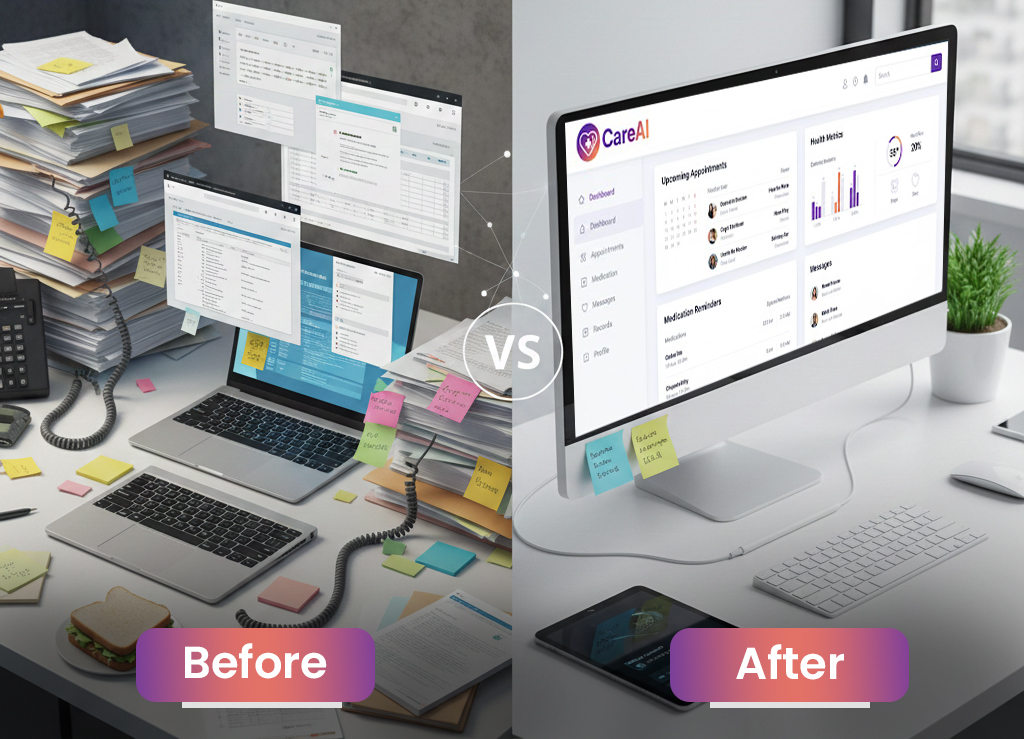
Companies that transition from conversation-driven to system-led operations discover a new level of efficiency. Imagine:
every patient case
Estimates digitally
approvals and GOPs
and invoicing
for full transparency
This is where solutions like CareAI come into play. By replacing fragmented tools with a unified, cloud-based healthcare case management software, organizations in the GCC and globally are transforming their operations. They're not just saving time and money; they're empowering their teams, improving patient outcomes, and building a more resilient, scalable future.